

By Franklyn M Malambo
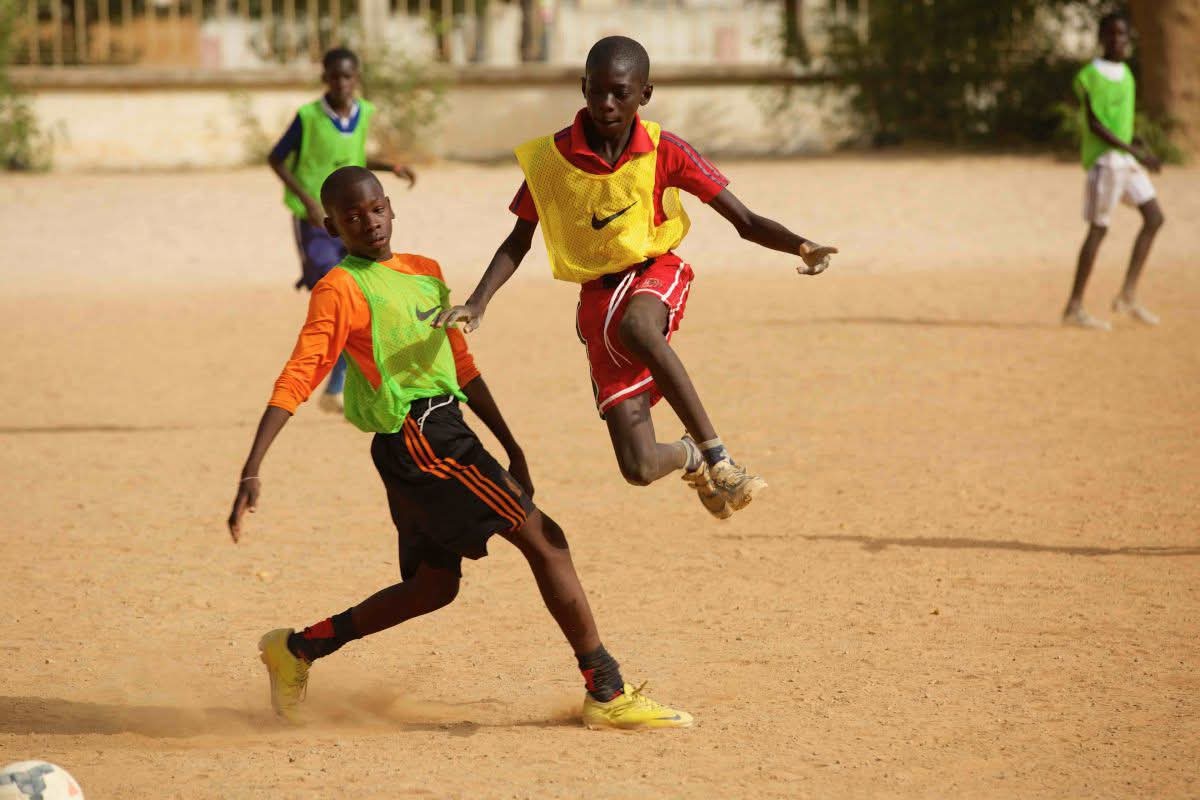
Across Africa, some of the most gifted players over the years have not been produced by academies but on dusty streets, narrow compounds, and improvised pitches.e.g Jay-Jay Okocha, Kalusha Bwalya, Mohamed Salah e.t.c This informal environment develops qualities that structured systems often struggle to teach: creativity, resilience, decision-making under pressure.
However, with urbanization gradually erasing these informal spaces, a new challenge has emerged. Academies and schools are now central to development, but they often produce players who are compliant rather than expressive. They are technically sound, yet lacking instinct and individuality.
In all this, there needs to be a bridge between the informal football (street) and academy/Schools’ football (structured) which is on the rise to ensure players ready for the top are made. The challenge is not to replace street football but to refine it using structured academies/schools’ football without losing its essence.
UNDERSTANDING THE STREET ADVANTAGE
• Freedom of Expression – Players learn without fear. Skills are explored, not instructed.
• Game Intelligence – Constant play develops awareness, improvisation, and quick decision-making.
• Natural Competitiveness -Informal games are intense, emotional, and self-regulated (remember the days of ‘game 10’, unless one team scores 10, the game doesn’t finish)
WHERE STRUCTURE MUST STEP IN
• Refining Technique Under Pressure – Not just “what” to do, but when and why.
• Introducing Tactical Concepts – Positioning, spacing, and collective understanding (It is never too early to introduce these concepts, they are part of developing the football brain)
• Physical and Psychological Support – Injury prevention, nutrition, and confidence management.
THE RISK – we cannot ignore the fact that the biggest risk in structured environments (academies/schools) is over-Coaching. Too often, when players enter academies, their instinct is replaced with instruction. Creativity is reduced to compliance. The street player becomes predictable and unfortunately in some cases, very limited.
In the tightest of contests, they cant perform and reaching the highest level becomes only but a dream despite years of investment.
THE BRIDGE – A SMARTER CHOICE
• Use Game-Based Training – Replicate street conditions through small-sided games and constraints.
• Guide, don’t control – ask questions instead of giving constant solutions.
• Preserve Identity – Allow players to express their natural strengths within structure.
• Contextual Coaching – Adapt methods to the player’s background and not imposing rigid systems.
THE WAY FORWARD – African football does not need to choose between street and structure but it must connect them. The goal is not to produce robotic players, but intelligent footballers who combine creativity with clarity and able to perform at the highest level.
When done right, structure should not silence flair, rather, it should sharpen it.
Until next time, I remain #FootballMissionary | 2026.05.05.




Very well written article bro. Funny thing about growing up in Zed and playing school sports. I remember our Zambian teachers when they coached our team seemed to focus more on the physical; running, frog jumps, push-ups/press-ups, etc… Then we had an Englishman (who was a UEFA B licensed coach) coaching the junior team and he focused on tactics and ball movement. Those boys almost beat the senior team, had it not been for us being bigger and more physical, they would have massacred the senior team. I definitely feel you on the overcoaching, I think what you need is coaches who can tailor and focus on enhancing youths abilities, but also allow them to grow in tactical understanding.