

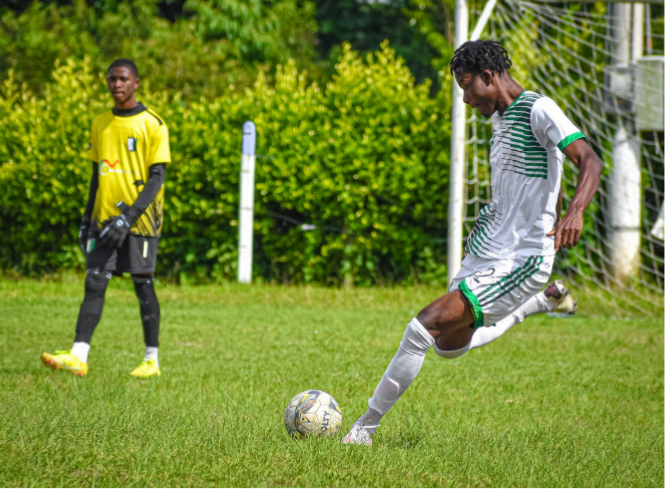
Five breakout Zambian players walk into the 2026/27 season with a real shot at reshaping the Chipolopolo pecking order, and the timing is anything but accidental, since interim coach George Lwandamina is rebuilding at home and abroad barely weeks before the 2027 Africa Cup of Nations qualifiers open away to Algeria. The talent runs young, the openings are genuine, and the crowd tracking these names has never been this big.
Look at the fixture list and the pressure is already baked in. Zambia drew a demanding Group I alongside Algeria, Togo and Burundi, travel to Tizi Ouzou on 25 September, then host Togo four days later at Levy Mwanawasa Stadium in Ndola, a schedule that gives a coach short on time every reason to back fearless youth over familiar faces. A nation still hungry after clawing its way back to the continental stage can’t afford to stumble out of the gate.
That squeeze explains the experiment Lwandamina has been running back home. He built his local squad around current club form rather than fading reputations, pulling in players from the Mukuru Four Nations tournament in Botswana and the March friendly away to Argentina, and even promoting four teenagers straight out of the under-17 ranks. His message landed plainly enough: form now, not a familiar name.
Off the pitch, meanwhile, something has shifted around these players that has almost nothing to do with football itself. Zambian football is followed on phones first these days, streamed, argued over and shared through the same mobile-money rails, Airtel, MTN and Zamtel, that push salaries and shop change around the country every single day. The homegrown game turned into a national online conversation while nobody was quite looking.
Zambian-run entertainment platforms mark that shift as clearly as anything, licensed locally and wired straight into those same wallets, with BongoBongo bet among the names built on that plumbing. What matters isn’t what happens on such a platform but what it signals, a country now consuming its football, and its digital downtime, through infrastructure it owns outright instead of renting from somewhere else.
Eliya Mandanji is the name that should stir anyone who still believes in the local league. The 18-year-old Zanaco striker was one of four under-20s handed a senior call-up after a domestic season that made him impossible to look past, and he buries the scruffy goals as happily as the clean ones. Choosing to stay home and earn the recognition, rather than chase an early move abroad, tells you a fair bit about his temperament and his nerve. If one home-based forward smashes through the ceiling this term, my money is on him.
David Hamansenya took the harder road, and it is already returning interest. Born in Lusaka in 2007, the left-back came up through the Leganés academy in Spain, earned his senior Zambia call-up late in 2025, then started the entire group-stage match against a ruthless Morocco side at last season’s Africa Cup of Nations, a test few teenagers would have fancied. Weekly minutes on loan at Artis Brno in the Czech top flight are banking now, and regular first-team football at that age is exactly what a raw defender needs to turn promise into a settled place.
What Zambia has quietly gone without for years is a genuine Serie A engine in midfield, and Joseph Liteta fits that gap. The 20-year-old joined Cagliari from Atletico Lusaka back in 2024, lifted the Coppa Italia Primavera with their youth side and has since started collecting top-flight minutes for the Rossoblù, so he turns up for the qualifiers hardened by Italian football rather than shielded from it. He’ll need every bit of it, given the qualifying draw that pitched his country against a heavyweight in Algeria. A midfielder who can drag the tempo down in Tizi Ouzou is worth more than any highlight reel, and that European seasoning tends to travel well.
Purest product of the home experiment is Given Kalusa. The FC MUZA man muscled his way into senior contention on domestic form alone, and he now sits beside four under-17 graduates, goalkeeper Christo Chitambala, full-back Jonathan Kalimina, winger Kelvin Chipelu and forward Abel Nyirongo, all fast-tracked into the same camp. A domestic league capable of feeding that many teenagers into one squad is doing plenty right. Depth of this sort used to be little more than a rumour in Zambian football.
Rounding out the five is Joseph Sabobo Banda, whose story shows just how far these players will now travel to sharpen up. The winger first tested himself in Switzerland before his switch to Israel with Hapoel Be’er Sheva, and has since moved on to top-flight football with Alashkert in Armenia, the sort of step up that should tidy an end product that once flattered to deceive. A Zambian wide man learning to defend and finish in a serious league is precisely the upgrade the Chipolopolo have been begging for on the flanks.
The academies have already done their bit in all this. What’s left is uncomfortable and it sits squarely with the selectors, because talent this young rarely waits politely for a coach to make his mind up, and rival national teams are eyeing the very same names with genuine interest.



