


Chipolopolo forward Lameck Banda is at the centre of a contractual dispute with Italian Serie A side US Lecce, with the standoff now threatening to become a legal battle involving FIFA.
At the heart of the dispute is whether Lecce validly exercised an option to extend Banda’s contract, and whether the Zambia international was therefore still under contract when he moved towards Libyan club Al Swehli.
But how did we get here?
From historic signing to contractual dispute
Banda joined Lecce in August 2022, becoming the first Zambian player to sign for a Serie A club. The former Nkwazi and Buildcon winger signed a four-year contract with an option for a further year.
“It’s a dream come true to play in Italy and I can’t be more happy,” Banda said after completing the move.
He made his historic Serie A debut on 13 August 2022, coming on as a 74th-minute substitute in Lecce’s 2-1 defeat by Inter Milan at the Stadio Via del Mare.
Three months later, he became the first Zambian to score in Italy’s top flight when he found the net against Atalanta on 9 November 2022.
Banda has since made 109 appearances for Lecce, contributing nine goals and 12 assists. Nine of those 21 goal contributions came last season as he helped the club avoid relegation.
However, the relationship has now taken a dramatic turn.

What triggered the dispute?
The club said the player had been called up to resume training but reported a further delay because of “logistical and bureaucratic issues”.
Lecce said it would investigate the circumstances and reserved the right to take disciplinary action if it found that Banda had failed to fulfil his contractual obligations.
“The club will carry out the necessary in-depth investigations regarding the circumstances taken by the player, reserving any initiatives, even on a disciplinary level, that are aimed at the correct fulfilment of contractual obligations related to the employment relationship that expires on June 30, 2027,” Lecce said in a statement.
On 30 July, Bola News reported that Banda would not be returning to Italy because Lecce had allegedly extended his contract without his approval. Saudi Arabian club Al-Fateh had also been linked with the player.
Banda was reportedly unhappy with the manner in which Lecce had exercised the extension, believing that a new agreement required mutual consent.
On 11 August, reports emerged that Lecce had referred the matter to FIFA over Banda’s failure to report for pre-season. The club was awaiting guidance from football’s world governing body over possible sporting sanctions or restrictions.
Around the same time, reports emerged that Libyan club Al Swehli had offered Banda a two-year contract worth €1.6m per season as it prepared for its CAF Champions League campaign.
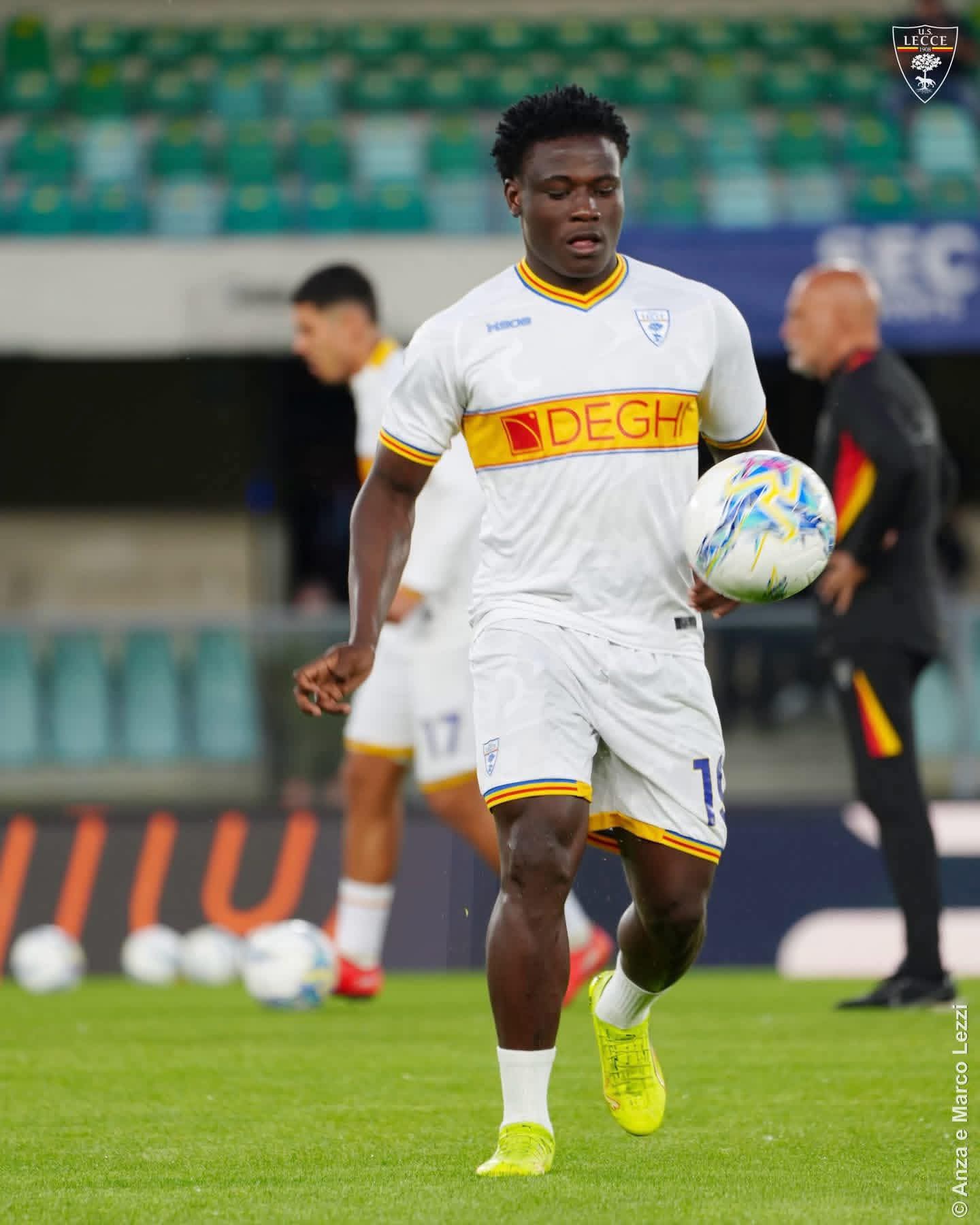
Banda has reportedly joined Al Swehli as a free agent. The Libyan club disputes Lecce’s position that it had the right to automatically extend Banda’s contract for the 2026/27 season, arguing that the option was unilateral and that Banda did not sign a new agreement consenting to another year.
What does Lecce say?
Lecce president Saverio Sticchi Damiani has strongly disputed the suggestion that the extension was imposed on Banda without his knowledge or agreement.
“Certainly, but I’ll tell you more. The option has always been part of Lameck’s contract, ever since he first arrived in Salento in the summer of 2022. We could have extended his contract and notified him with a simple certified email, but instead, last May, we also summoned him to the club’s headquarters: Banda, assisted by his former agents, signed a document agreeing to our exercise of the renewal option. We involved him constantly and fairly. On our social media, we even made the renewal official with a post – Banda still together 2027,” he told Gazzetta.
Damiani also described Banda’s relationship with the club as positive, saying the winger had even requested a salary advance to help cover his wedding expenses.
“Extremely positive, also thanks to the breakthrough season he had finally managed to have. A few weeks earlier, he had posted a photo on Instagram to celebrate 100 appearances for Lecce, calling us his Italian family. There was a relationship based on affection and synergy. Relations between Lecce and Banda were excellent. In June, he asked me for an advance on part of his salary to cover significant wedding expenses, and as always, I agreed.”
The Lecce president also addressed reports linking Banda with Al-Fateh.
“Calling it a negotiation seems excessive to me. We received a very low offer from Al-Fateh, which proposed an amount even lower than what we had invested to buy Lameck in 2022. We refused, and that was the end of it. Many clubs start negotiations this way, sending lowball offers and then sitting down to talk, trying to understand what the other party wants. The Saudis were never truly interested because they never made a counter-offer.”
Damiani believes the dispute is linked to Banda’s desire to secure a move to Al Swehli.
“Obviously. The Libyan club officially submitted a proposal to acquire Banda’s registration a month ago, offering us a very low figure. Therefore, they were aware of the existence of a relationship linking Lameck to Lecce, then after our refusal, they devised a plan, with the complicity of the player, to take him away without paying a single euro. They tried to request the transfer from the FIGC, which, of course, said no and sided with us. But now Al Swehli and Banda will knock on FIFA’s door.”

What does the Lassana Diarra ruling mean for Banda?
This is where the case becomes particularly interesting.
Diarra challenged FIFA’s rules after his dispute with Lokomotiv Moscow in 2014 left him unable to easily secure a move to another club. The ECJ ruled that parts of FIFA’s regulations were incompatible with European Union law and reinforced the principle that professional footballers are workers protected by EU and labour law.
Under the previous system, players who terminated contracts without “just cause” could face unpredictable compensation claims, sporting sanctions and difficulties obtaining an International Transfer Certificate (ITC). A new club could also be held jointly liable for the compensation, potentially discouraging it from signing the player.
Following the ruling, FIFA amended its regulations. Crucially, a former club can no longer simply block the registration of a player because of an ongoing contractual dispute. A player can therefore be registered provisionally while the underlying dispute is considered by FIFA’s relevant tribunal.
The ruling does not, however, mean that players can simply walk away from contracts without consequences.
Compensation can still be ordered where a player is found to have breached a contract without just cause. However, the calculation is now expected to place greater emphasis on the remaining value of the player’s contract and applicable national labour law, rather than transfer fees negotiated between clubs or a player’s alleged market value.
The ECJ also questioned the previous presumption that a new club had induced a player to breach his contract. Under FIFA’s amended regulations, such inducement must now be established rather than automatically presumed.
What happens next?
Lecce believes Banda remains under contract until June 2027 and intends to pursue compensation if FIFA determines that the player breached his agreement.
“Lecce will present a series of elements that are the result of this affair. We patiently nurtured Banda, endured his mistakes on and off the pitch, until he finally became a decisive and consistent player for us only this season, where he was the team’s top scorer. Now, replacing him will incur a significant cost for my club. In addition to compensation, the protagonists of this unpleasant affair deserve to be sanctioned. Otherwise, a precedent will be set that legitimises a ‘free-for-all’ atmosphere, where everyone can do as they please. Players under contract will feel free not to respect them based on their own convenience, and the most unscrupulous clubs will speculate on FIFA’s ‘provisional transfer’. I hope this is not just Lecce’s battle, but that of all clubs who respect the rules. The player deserves to be disqualified, while the Libyan club should be excluded from transfer market negotiations.”
Damiani also believes FIFA will allow Banda to receive provisional clearance to play for Al Swehli while the dispute is heard.

“They will ask for clearance to register Lameck. Following the famous Lassana Diarra case, unfortunately, FIFA, to avoid engaging in anti-competitive behaviour, will automatically grant a ‘provisional transfer’. It is likely that Banda will illegally start the season playing for Al Swehli. However, FIFA itself provides a dedicated tribunal for the parties, to which Lecce will turn to open a dispute,” he added.
Lecce is now focused on securing compensation for what it considers to be losses caused by Banda’s departure.
“The timelines are usually not long, but today it’s difficult to make an estimate. Our goal is for the tribunal to correctly quantify the compensation for damages due to the unilateral breach of contract, without just cause, perpetrated by Banda with the complicity of Al Swehli, who induced him to pursue such an unscrupulous course of action,” Damiani told Gazzetta.
The key issue, therefore, is no longer simply whether Banda can play for Al Swehli. Under the amended FIFA framework, he can potentially be registered on a provisional basis while the dispute is being determined.
The bigger question is whether Lecce can prove that Banda remained contractually bound to the club, that his departure amounted to a breach without just cause, and whether the club is entitled to compensation.
For Banda, Al Swehli and Lecce, the next significant chapter will be decided through the FIFA dispute-resolution process.



