

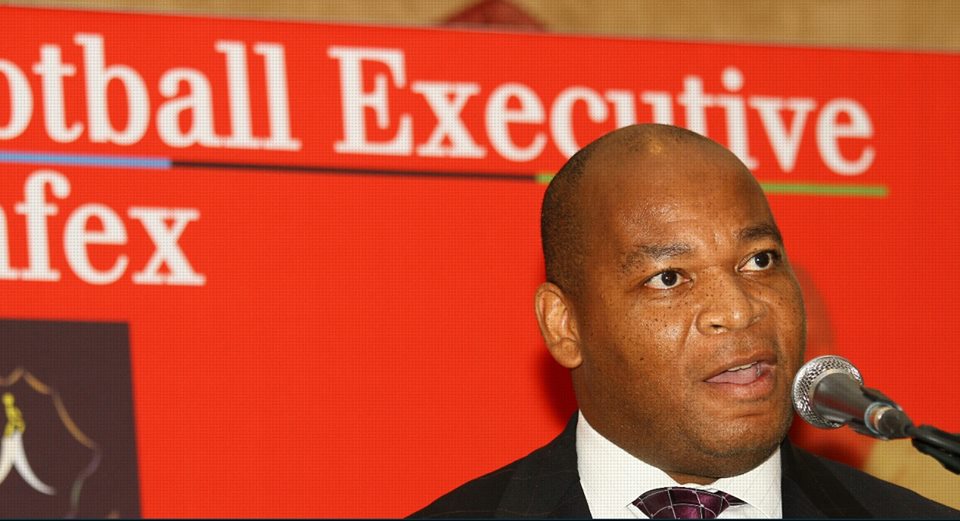
By Ponga Liwewe
The recently ended CHAN tournament has highlighted several deficiencies that continue to afflict Zambian football and show no sign of changing as the game struggles to regain its former status on the African continent.
Zambia’s quarter final loss to Guinea appeared close on paper but, truth be told, the gap in class between the two teams was much wider than the result showed. Guinea strung their passes together in a coherent pattern, their first touch on the ball was excellent, and they played with a pace and verve that Zambia could not match. Watching the two semi-finals after Zambia’s exit, it was patently clear that the last four teams, Guinea, Cote d’Ivoire, Mali and DRC were a cut above the Zambian team.
With the exception of the 2012 Africa Cup of Nations success, Zambia’s showing in the last two decades, both at club and national team level, has been nothing to write home about. The subsequent form of the national team in successive tournaments – after 2012 – show a return to failures of the period between 1998 and 2010, when Zambia bowed out of tournament in the first round, with the exception of 2004 when, even worse, the team failed to even qualify.
The consecutive first round exits threaten to confine Zambia to the category of one-hit-wonders, like Ethiopia and Sudan, who also have Africa Cup victories on their records but have never been able to come close to making an impact in African football again.
Where does Zambia’s resurrection lie?
In reinventing the domestic game as a hub of youth development- as was the case in the seventies and eighties- when school’s football was the engine that churned out talented individuals who could hold their own against any other players in African football. Zambian clubs featured in the finals of African club competitions and rarely went out before the semi-final stage. It was a similar situation with the national team that, in the eighties alone, played a final and two semi-finals in the Africa Cup of Nations. The story of the demise of Zambia’s football structures does not need repetition here; they collapsed with the dismemberment of Zambia Consolidated Copper Mines and with the country’s precipitous economic decline that led to the abandonment of the socialist policies of the UNIP government and the painful restructuring of the transition to a free-market economy.
Since that calamitous period for Zambian football, the school’s and mining community football structures that churned out Godfrey Chitalu, Dick Chama, Charles Musonda, Kalusha Bwalya, and Wisdom Chansa and so many other great stars disintegrated and were not replaced or reinvented.
Worldwide, the shift from schools or communities to club-owned or Football Association-run programmes has taken place. Those countries that failed to make the transition have seen their fortunes decline. Zambia is a prime example. Today, with schools no longer the engine room of football development, most players filtering into the development teams come from academies that have been set up by individuals through their own efforts and from some of the clubs that have belatedly set up their own youth structures. They should be commended for their efforts in taking up the initiative to fill the void left by the collapse of national structures. Yet, they will be the first to admit that the quality of players coming through the ranks is a far cry from the past generations that made Zambia a household name.
On the eve of Zambia’s 50th Independence celebrations last year, several veteran followers of Zambian football were asked to select their best ever eleven in fifty years of Zambian football. Those who had been privileged to see the evolution of the domestic game from the seventies to date selected players who had been prominent in the earlier era, leaving out even those who had brought the country their first ever Africa Cup success in 2012. Their selection evoked the ire of the younger generation who had not had the opportunity or privilege to see Zambian football at its zenith, but then lack of TV footage from that great era means that they will not be able to make the comparison.
If Zambia is to return to become a consistent and leading side in African football again, the onus lies on the games leaders to design and implement a structure that will, once again, take young players from an early age through a development programme that teaches the basics from an early age, run by qualified personnel and that graduates players from their local township, village or community through city, district, provincial and national foundations into the clubs and ultimately the national teams. This requires funding and recruitment of qualified staff, development of training facilities and a coordinated and formalised development programme.
Such transformation requires competent, focused and committed leadership. It also needs management structures and personnel with understanding of how to manage organisations in the 21st century and in a dynamic and fast-changing world. The ways of operating in the past will not hold up in today’s environment. As any management student understands, an organisation that does not evolve and adapt will inevitably fail and wither away. Zambian football administration needs to take its ‘great leap forward’ if it is to return to the fore of the African game and challenge for African titles and to achieve world cup qualification.




Can’t put it any better. Well said my bro.
This article explains it all..
You bloody lair.That game was spoiled by that Ethiopian referee.This simply means your Father was more intelligent than you Pongo.
Wow, every place has that one guy who can’t see the forest because the trees are in the way, and you sir are that man.
true it was ponga is such a dogy
Well spoken Ponga. The last two paragraphs points out what most of us have been calling for – financial and structural investment as well as credible leadership at FAZ. The latter is a matter of urgency.
It was zccm runing footbal in zambia
This article is talking about falling standards of the game in Zed in general. The root cause and not the actual game with Geanue. Ponga is 100% correct and has highlighted valid points which have failed us. We need to more to revamp our football, the administration is not up to scratch the technical staff is also very questionable. When are we going to see those glorious days back in Zambian football.
@Nazo and Wizard whatever you are called just shut up if you have personal issues with Ponga, the man has highlighted critical areas as a nation we need to work on but busy rubbishing what the poor man has said. Morning
Ponga, has eloquently put on paper what a lot of people have been thinking. The quality is not what it used to be and there is need for a change in the game.
Ponga’s merit is putting into a single article what many have been saying for months on Zamfoot. Please lets face the facts…lets put aside coping strategies because denial never helps….Ponga might have been wrong on many issues in his analysis but what he says here is so true. The national team is struggling and it just reflects the standards of our leading clubs…When did one of these clubs reach the semis of the Champions’ league or the CAF cup? Most fans cant even remember yet in the 80’s it was pretty normal for Nkana to expect to reach the semis….for some it even became a career limiting activity with their ZCCM employer.
I partly agree with him though not wholly convinced if we fix leadership at Faz then we expect to have some success in future . Leadership is even much more needed at club level ,the youth development at almost all local clubs is dead. Clubs are only rushing to buy the already established names and very few players are being promoted to senior teams . The local coaches have also diverted from adopting our traditional passing game to chipante pante which does not suit our smally built players . Its a number of factors put together than just focussing at football house leadership. We can also confirm that some nations with developed youth soccer structure could not even qualify for Chan ,and thus its proper only to look at this situation in relative terms
I can agree with Ponga especially on the game between Zambia vs Guinea. The results of that game was not the true reflection of the game. Zambia could have been slaughtered by 4 goal to zero by Guinea. Guinea were too far better than Zambia, very classy, better in ball possession,neat passes, highly tactical and better game plan than Zambia. As for Zambia, it was “To Whom It May Concern” type of football. Kick forward and run, or rather chidunu type. The only positive that came from Zambia in that tournament was the ability by the defence not to allow goals in 90 minutes or 120 minutes of play.
@Billy-Even that defending left much to be desired….no class at all..No wonder none of our defenders was picked among the CHAN 2016 selection in spite of their ‘proud’ record. For me of all our players, our defenders were the most guilty of chipante pante. We were just very lucky!
I agree with Ponga’s analysis of the match between Gyinea and Zambia but do not totally agree with his general analysis of Zambian football. If we are to divide Zambian football into two eras, the Kaunda era and the post Kaunda era, that is, after 1991, then we have to say Zambia has achieved much more in the latter half than in the former. In the supposed golden era that Ponga is talking about, Zambia only managed one Afcon appearance in 1974 (the replay does not count as another final) and only won one regional tournament, the East and Central African Senior Challenge in 1984. The only highlights in this period were the Afcon semi-final in 1982 in Libya and the 1988 Olympics quarter final appearance when we beat Italy 4-0. Zambia has achieved more success in the post-ZCCM era winning the 1991 East and Central Senior Challenge cup, the Cosafa cup four times, the Cecafa cup twice, and two Afcon final appearances with a victory in 2012. In terms of accolades, the new generation has won more than the older generation. It has to be admitted though that the older generation played football that was more pleasing to the eye.
I think that up to 1998 we were still surfing on the Kaunda/ZCCM wave…Things began to fall apart when the all the youths that who had benefited from that combination of favourable opportunities (ZCCM structures, admin, school football- to a lesser degree, though-…) available during the KK era had become adults. It’s just like automobile makers; they don’t close their plants the day the last car rolls out of the assembly line but a few years later when demand for spares can longer be met!!
George Lwandamina’s philosophy seems to be playing to avoid losing. He doesn’t play to win. For me that us the undoing of our game. With this approach, it explains why we have to consistently play two holding midfielders even when we playing a weak team. We have given away our creative part of the game. Lastly, we no longer play with our natural wingers, we convert centre forwards to play on the wings. The beautiful game Ponga is talking about had genuine creative midfield players and quick dribbling wingers. Today’s game kuwayawaya fye
Well spoken Ponga, can’t agree with you more. Our current Coach is equally clueless tactically and technically.
Much as I agree with what the article is articulating, the problem with the current management of football in Zambia is Kalusha Bwalya, and he is the sole policy direction for Zambia. There are people who could have contributed for the development of the game but were denied by the selfish great kalu.