


By Josphat Maimisa
Zambian women’s football has evolved significantly across the developmental spectrum—from the Under-15, Under-17 and Under-20 national teams to the senior national team. Zambia’s growing presence on the international stage, including participation in COSAFA, CAF Schools competitions, the FIFA Women’s World Cup, Olympic Games and the Women’s Africa Cup of Nations (WAFCON), provides compelling evidence that the country’s women’s game is no longer merely developing; it is increasingly becoming a competitive force.
But progress creates responsibility.
The question confronting Zambian football is no longer simply whether the country can produce talented female footballers. It is whether the football ecosystem can build a sustainable technical pathway capable of continuously developing, managing and maximising that talent.
This is where investment in coaching must become a national football priority.
TALENT CANNOT OUTGROW THE TECHNICAL SYSTEM
The emergence of exceptional players has demonstrated that Zambia possesses abundant football talent. However, talented players require technically competent coaches who understand modern football methodology, player development, sports science, tactical innovation, psychology, safeguarding and the increasingly sophisticated demands of the international game.
The next generation of Zambia’s football success will therefore depend not only on what happens on the pitch, but also on who is standing on the technical bench.
Zambia needs fortified technical structures staffed by professionally trained coaches who are continuously exposed to advanced coaching trends and contemporary football methodologies.
A coach cannot remain relevant by depending solely on yesterday’s football knowledge.

Football is changing rapidly. Training methodologies are evolving. Match analysis has become increasingly data-driven. Tactical systems are becoming fluid. Player welfare, nutrition, psychology, injury prevention and load management are now integral components of elite performance.
Consequently, coaching education must move with the game.
LOCAL COACHES ARE PART OF THE SOLUTION
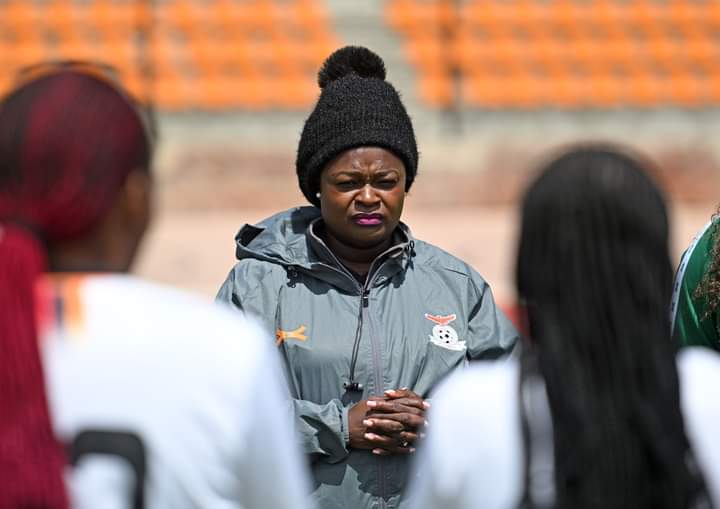
One of the most encouraging developments in Zambian football is the emergence of local coaches demonstrating the capacity to manage and develop players competitively.
These emerging gaffers are evidence that Zambia does not lack coaching potential. What is required is deliberate investment in that potential.
Local coaches understand the environment in which Zambian football operates. They understand the communities, schools, academies, clubs and socio-cultural realities from which players emerge. They understand the challenges confronting young girls who aspire to become professional footballers.
That contextual knowledge is invaluable.
However, potential must be converted into professional competence through structured investment.
Coaches need opportunities to acquire higher licences, attend specialised courses, participate in technical exchanges, access modern performance-analysis systems and learn from established football cultures. They must also be exposed to international competitions and technical environments where ideas can be exchanged and professional standards challenged.
If Zambia can invest in developing its players, it must equally invest in developing the people who develop those players.
THE PART-TIME COACHING QUESTION
One of the less discussed challenges in women’s football is the continued dependence on coaches whose national-team responsibilities exist alongside their club commitments.
Part-time engagement can create an uncomfortable structural conflict.
A coach whose livelihood depends substantially on a club must inevitably remain accountable to that club. The coach’s time, attention and professional priorities can therefore become divided between national-team responsibilities and the institution that sustains their daily livelihood.
This can affect continuity in player identification, scouting, selection, tactical preparation and long-term technical planning.
It can also compromise the autonomy of decision-making.
The national team should ideally operate within a technical environment where coaches have sufficient professional independence to make selection and tactical decisions based primarily on sporting merit, developmental objectives and national-team strategy—not on competing institutional obligations.
This is not an indictment of coaches working under such arrangements. Rather, it is a structural issue that football administrators must confront.
Professional expectations require professional structures.
SELECTION MUST BE BUILT ON MERIT, CONTINUITY AND TECHNICAL AUTONOMY
A strong national-team programme requires more than assembling the best players shortly before an international tournament.
It requires an established scouting architecture.
It requires databases.
It requires regular monitoring of players across provinces, schools, academies and clubs.
It requires age-group continuity.
Most importantly, it requires a technical team that has adequate time and resources to observe players over extended periods.
A player who performs exceptionally well at Under-15 level should not disappear from the national development pathway at Under-17 level. An Under-17 player should have a clearly defined route towards Under-20 football and, ultimately, the senior national team.
That is how football legacies are built—not through isolated tournaments, but through deliberate pathways.
THE FUTURE GAFFER IS ALREADY HERE
Zambia should also resist the temptation to believe that every solution must come from outside the country.
The country has coaches with knowledge, passion, experience and the potential to compete at higher levels. What many require is not replacement, but refinement.
Give them advanced education.
Give them exposure.
Give them mentorship.
Give them professional environments.
Give them access to technology.
Give them opportunities to work alongside experienced international technical personnel.
Then hold them accountable to measurable professional standards.
That is how a football nation develops its own coaching identity.
The objective should not merely be to produce players capable of exporting their talent abroad. Zambia must also produce coaches capable of exporting their expertise.
FROM PLAYER DEVELOPMENT TO FOOTBALL DEVELOPMENT
The success of the Copper Queens and Zambia’s growing participation across international competitions should therefore be interpreted as a call to build deeper foundations.
Women’s football requires investment beyond playing kits, competitions and travel.
It requires investment in technical education, sports science, scouting, refereeing, administration, safeguarding, facilities, grassroots structures and coaching development.
The Under-15 player of today could become tomorrow’s Copper Queen. But the coach working with her today could also become tomorrow’s national-team technical leader.
That possibility must not be overlooked.
Zambia’s football revolution will be incomplete if we develop world-class players while leaving the coaching system underdeveloped.
The ball may belong to the player, but the direction of the game is heavily influenced by the technical mind guiding it.
Zambia has already demonstrated that its women can compete with the best. The next challenge is to ensure that the coaches developing those women are given the same opportunity to become the best.
The future of Zambian women’s football may therefore depend not only on discovering the next Barbra Banda or Racheal Kundananji, but also on discovering, developing and professionally empowering the next generation of Zambian gaffers.
Invest in the player. Invest in the coach. Strengthen the pathway. Sustain the legacy.



